There’s a phrase Helen returns to throughout our conversation: “I believe you.”
Three simple words, but for someone who has spent months or years being controlled, questioned, isolated or made to doubt their own experience, being believed can matter deeply.
Helen is a Domestic Violence and Sexual Violence Expert and facilitator with The Uplift Project. Her understanding of this work comes from professional experience, but also from a personal understanding of domestic violence and what it can feel like to believe there is nobody to turn to.
“I know how it feels to have nobody to turn to,” she explains. “I know how it feels to think that there’s absolutely nobody out there for you.”
That experience helped shape the work she chose to do.
At 42, Helen returned to education. After completing an access course, she continued studying for four years and earned a Level 8 honours degree in Health and Social Care. She went on to work as a support worker, a role she describes with warmth and genuine affection.
For Helen, supporting people who have experienced domestic violence isn’t about having all the answers. It’s about creating somewhere a person can be heard without being judged, rushed or told what their life should look like.
Why “just leave” misses so much
One of the most important messages Helen wants people to understand is that leaving an abusive situation is rarely simple.
“Why did you not leave?”
It’s a question survivors hear far too often.
But behind that question can be a failure to see everything a person may be carrying.
There may be children to consider. There may be financial control, nowhere safe to stay, isolation from family and friends, fear about what will happen next, or years of having confidence and independence gradually worn away.
Abuse isn’t always physical, either.
Helen speaks about psychological, emotional, financial and sexual abuse, coercive control, stalking and digital abuse. Someone may be experiencing serious harm while still wondering whether what is happening to them “counts”.
Helen has heard women ask whether they should even be seeking support because their partner doesn’t hit them. Others compare their experience with somebody else’s and decide another person has it worse.
But support isn’t something a person has to earn by reaching a particular threshold of suffering. Each person’s experience is their own.
Support without taking over
Safety, choice and possibility sit at the heart of The Uplift Project.
For Helen, those words become very practical when someone is sitting in front of her.
You listen. You don’t judge. You don’t make decisions for them. You don’t tell someone, “You need to do this.”
Instead, you ask what they want. You help them understand what options are available. You recognise that they are the person living their life and that any decision about what happens next belongs to them.
That distinction is important because control has often already played too large a part in their lives.
Support shouldn’t become another place where somebody else takes over.
As Helen puts it, the role isn’t to rescue people or make their decisions. It is to “walk alongside them”, helping them understand their options and regain confidence in a way that feels right for them.
Sometimes that means exploring available services. Sometimes it means thinking about safety. And sometimes it simply means sitting with someone and listening.
Sometimes presence is enough
There’s an understandable idea that helping means fixing.
Helen sees it differently.
Someone making contact for the first time may have thought about doing it many times before. They may have picked up the phone and put it down again. They may be frightened, anxious or unsure about what they even want to happen next.
So the first conversation doesn’t have to solve everything.
Sometimes, Helen says, being there is enough. Listening is enough.
Giving someone room to speak, cry, be quiet or simply experience a space where they aren’t being judged can be meaningful in itself.
Keeping the door open
One of the most compassionate parts of Helen’s approach is her belief that support shouldn’t disappear because somebody makes a decision others don’t understand.
A person might reach out and then step back. They might return to a relationship. They might decide they aren’t ready to make a change. That doesn’t mean the door should close.
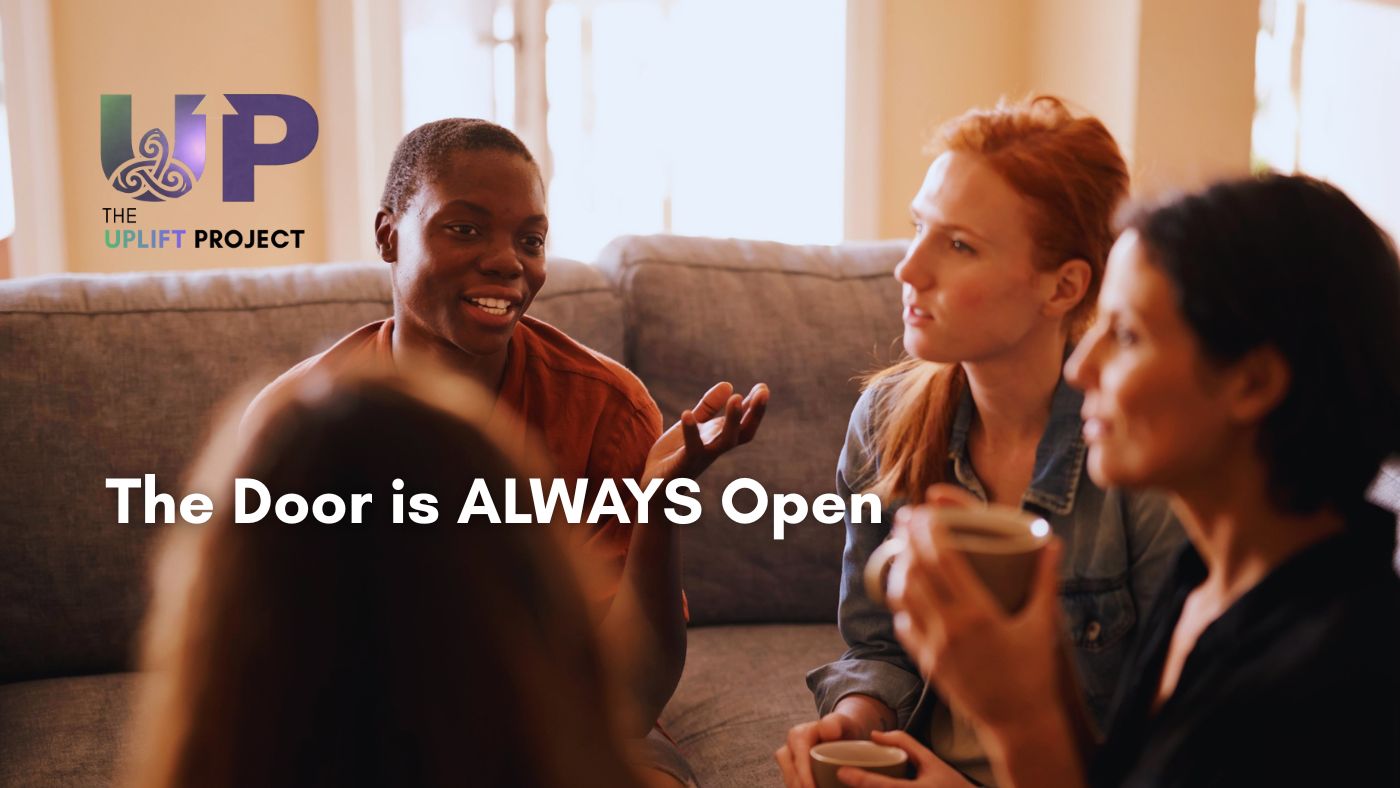
“You have to leave that door open,” Helen says. “There should be no punishment for returning. No demand for an explanation. No ‘I told you so’.”
Feelings, relationships, fear, hope and practical realities don’t disappear because someone has spoken to a support worker. A person can still love someone who has harmed them. They can still hope things will change. They can know something is wrong and still not feel ready to leave.
The role of compassionate support is to respect that complexity while making sure the person knows that support remains available.
Come once. Step away. Come back.
The door is still open.
Finding connection again
The Uplift Project also offers something that can be difficult to recreate through one-to-one support alone: community.
Isolation is a recurring theme in Helen’s conversation. Domestic abuse and coercive control can gradually separate someone from friends, family, activities and the wider community. Over time, a person can lose not only relationships but a sense of who they are outside the abusive environment. That’s why connection can matter.
For one person, support might mean sitting down for a private conversation. For another, it might mean going for a walk, taking part in a class, meeting other people or simply spending a little time doing something that isn’t centred on what they have experienced.
There is no expectation that somebody has to tell their story to belong. They can simply be there.
Helen talks about the friendships and bonds that can grow through community. About rebuilding confidence. About doing things someone may not have done in years.
Having choices matters
Maybe today isn’t the day someone wants to talk.
Maybe today they want to take part in something, meet people and feel part of the world again.
That counts too.
Getting pieces of life back
When Helen hears the word “uplift”, she thinks about dignity, respect, confidence, trust and independence.
She thinks about people beginning to make their own choices again.
And she thinks about identity.
Abuse and coercive control can affect everyday freedoms that many people take for granted: seeing friends, spending money, joining a class, making plans or deciding how to spend an afternoon.
Rebuilding doesn’t have to mean returning to exactly who someone was before.
It can mean discovering what life can look like now.
A different kind of support
Helen believes The Uplift Project can offer another option alongside existing forms of support.
It is a space built around compassion, community and choice, where people can be heard and respected without being pressured to make decisions before they are ready.
There is no single path that everyone has to follow. There is no requirement to explain yourself publicly. And there is no expectation that somebody arrives knowing exactly what they need.
As Helen’s conversation reminds us, support doesn’t always mean leading someone somewhere.
Sometimes it means walking alongside them, listening to them, helping someone see that choices still exist. And sometimes it simply means making sure they know the door remains open.
The Uplift Project exists to offer safe, non-judgemental support and connection. You can find out more or join our community in your own time, when and if it feels right for you.